
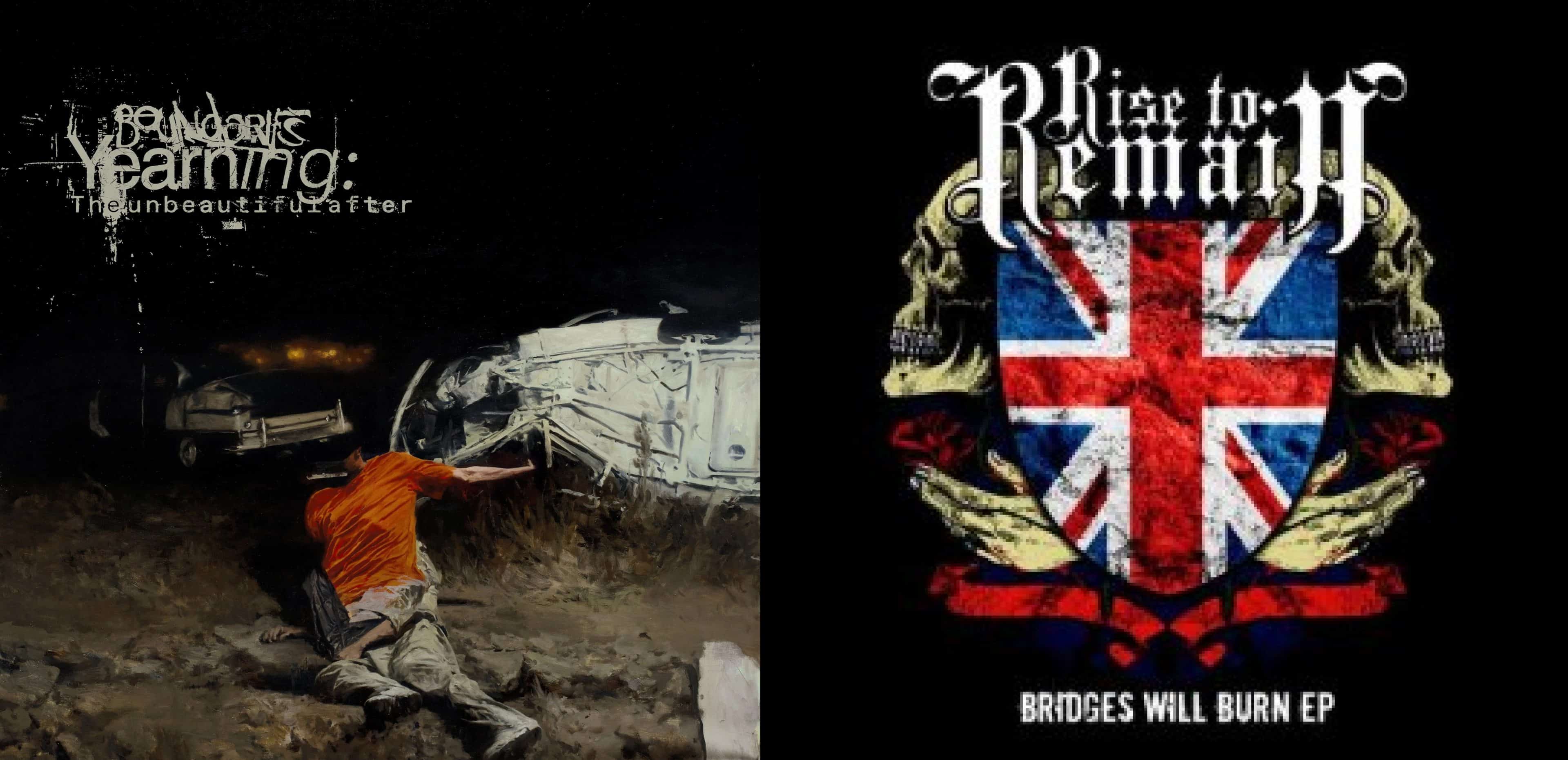
A few weeks ago, I saw an article in Kerrang! About claims from metalcore outfit Boundaries that metal is losing its teeth. I was intrigued enough to read through the article as I do think there is certainly an argument to be made about the sanding down of rough edges in more commercially aspiring metal bands. While I wasn’t completely on board with every point that vocalist Matthew McDougal made, it peaked my interest enough to check out a track from the new record – Yearning: the unbeautiful after. I was enjoying May this pain never leave (the lowercase parts of the titles are intentional from the band, but god do they make writing about them look awful) a decent amount. Solid Gothenburg influenced riffing and a vocalist who can actually sound aggressive in their screamed delivery. Then the chorus came in.
Let’s take a moment to define our term. Modern Metalcore: the strain of commercially minded metalcore that evolved out of the late 2010s and into the 2020s, taking influence from bands like The Amity Affliction, Motionless In White and Bring Me The Horizon from Sempiternal onwards. This is not a sub-genre I’m entirely opposed to. I think Spirit Box are quite good, for example. But as someone who is now certifiably old, I got into heavy music in the 2000s, when metalcore sounded very different to how it does now. As it became clear that it was the dominant commercial force in heavy music into the 2010s and bands started to take advantage of this, my own tastes began to tend to more extreme and expansive territories. We diverged from each other quite naturally, which was a shame as I do love metalcore.
Now, I do want to be clear, I am going to take pains to avoid this particular article as coming across as “old person shouts at clouds.” I want to focus on specific song-writing tropes that I identified as evolving in the 2010s in how metalcore bands started constructing their choruses – this is not “new thing bad”, more “certain conventions adopted by a new thing are aesthetically displeasing to me, even when identified in older things.”
Initially I had considered doing a full review of Yearning: the unbeautiful after, but I decided against it as I became increasingly negative on the record the more I listened to it. To the extent that I was hallucinating more melodic choruses into it to get annoyed about. Instead, I decided it might be illustrative to make my points about choruses by comparing and contrasting to a metalcore record I actually like. My first thought here was to pit it against a record from Killswitch Engage, but I quickly abandoned this plan. As much as I love Killswitch, it’s unfair to compare another band against one of the all time greats. I don’t measure every thrash record I listen to against Pleasure To Kill, then whine that they’re not as good. So I had to pick something a little less illustrious.
I ended up picking a classic of the genre, the 2010 EP Bridges Will Burn from British metalcore band Rise to Remain. Specifically the four track version distributed for free with an issue of Metal Hammer back in the day, as it’s the version I’m most familiar with. After all, it must be an all time banger – how else would Austin Dickinson and co. get the chance to open for Iron Maiden so quickly?
That’s enough easy jokes and scene setting, let’s get into why I’m actually here. Yearning: the unbeautiful after only has a few songs with melodic vocals and I will focus on these specifically to avoid this already slightly unhinged article losing any more hinges where I decry other elements of the album that aren’t relevant to my wider point. An overarching point across all the tracks in question is the over-sanitised production on the clean vocals. When compared to the fairly rough and aggressive production on the rest of the album (as much as I have my problems with it), it’s a startling contrast that makes the clean vocals feel as though they were cut from a different song entirely and pasted over the chorus. It also completely robs the clean vocalist of any sense of character – I would not notice if he were replaced by the clean vocalist of so many other contemporary metalcore bands. This is particularly egregious on the introduction to Only endless, which drowns the clean chorus in so many effects that I audibly asked if the band were taking the piss the first time I heard it. This also makes the occasional addition of Matthew McDougal’s screams to choruses sound jarringly out of place.
By contrast, the production style on Bridges Will Burn remains consistent between sections of the same songs (a wild idea, I know). This allows Austin Dickinson to use his cleans and screams in
both verses and choruses without sounding out of place, while retaining his unique character. There are vocalists that I personally prefer to Dickinson as both a screamer and singer, but if he was
replaced on this record, I’d be immediately able to tell you. And for me, part of what can make a chorus irresistible is that personal character that a good vocalist with decent production can imbue.
On the subject of the songs flowing smoothly, the choruses on Bridges Will Burn feel like a logical part of the song progression – sometimes using pre-choruses and bridges to transition in and out of
heavier terrains more smoothly. This is deployed particularly effectively on Nothing Left, a swelling, brief pre-chorus bursts into a soaring, triumphant, sing-along chorus.
On the opposite side of the spectrum, Boundaries hit us with The leper’s bell, which does have a pre-chorus before it’s first chorus. But it’s Napalm-Death-brief run time and vocal delivery make it sound like it’s teeing up another breakdown. This is sudden whiplash to a chorus I can only describe as timid-sounding doesn’t work. Given that they abandon this pre-chorus of a short, floaty synth part to bring the chorus back in when they need to exit out of a beat down, I would suggest that maybe the band knew this.
Now, far be it from me to criticise jarring transitions in songs. I love The Dillinger Escape Plan and Imperial Triumphant, I’d be throwing stones in glass houses. But there’s an old saying in jazz circles: “repetition legitimises.” When you repeat the same parts of a song several times, they cease to be surprising when they come back again and in Boundaries’ case just come across as inept.
One of the key things about a chorus, whether with clean singing or screaming, is the construction of hooks. The vocal lines that stick in your mind for days, weeks or even years afterwards, while still carrying the emotional content intended. Rise To Remain deliver these in spades throughout Bridges Will Burn. Purify is a great example. The nimble descending melody as Dickinson sings “Just who do you think you are…” into the more sustained, rising melody of “do you purify” creates rhythmic variation across a sticky vocal line that I end up humming to myself constantly for days on end.
For contrast, Death will follow me from Boundaries has a chorus that’s fairly static. “I wanna move on…” runs across four notes situated very close to each other, before moving onto another phrase that structured with almost the exact same rhythm and similar stepwise melody. It’s a trick that pop music uses a lot and that’s not, in itself, bad, I love a decent amount of pop music – my favourite pop song is What Have I Done To Deserve This, not a song you can accuse of have a particularly melodically complex chorus. Here, however, the straight rhythm and small melody don’t leave anything to cling to your brain. It’s forgettable. I had to listen to the song twice while writing this paragraph because I need to be constantly reminded what the chorus actually sounded like, rather than just its overall aesthetic tone.
It occurs to me, after over a thousand words comparing these two records, that a more hinged take would be to compare Electric Callboy’s oeuvre to Boundaries’ chorus construction. My heart isn’t
made of stone, Hypa Hypa is a modern classic for a reason. But that’s not how my brain works, I want my fascination with the evolution of this genre to have meant something. Ultimately, even if I’m no longer the target audience for Boundaries and their peers, I think metalcore fans deserve better. I think they deserve choruses that aren’t bad and maybe (unlikely I know) this piece will cause some of them to think about the music their bands deliver them and demand better. As modern metalcore embraces and uses more elements of pop and R&B, a desire for those bands to understand and construct those elements to a higher standard might even win me back over.
All that said, I can finally stop thinking about Yearning: the unbeautiful after. And if this article accomplishes nothing else, I’ll consider it a success. Sometimes you have to extract your brain worms in front of the internet before they go away.

Matty loves writing about horrible music that real human beings would hate. Currently writes for Rampage and tries to be normal about music they don’t like
- Matty Brooks

- Matty Brooks

- Matty Brooks
- Matty Brooks










Leave a Reply